Understanding the technological pipeline behind premium peptide production reveals why sourcing standards matter so much in modern science.
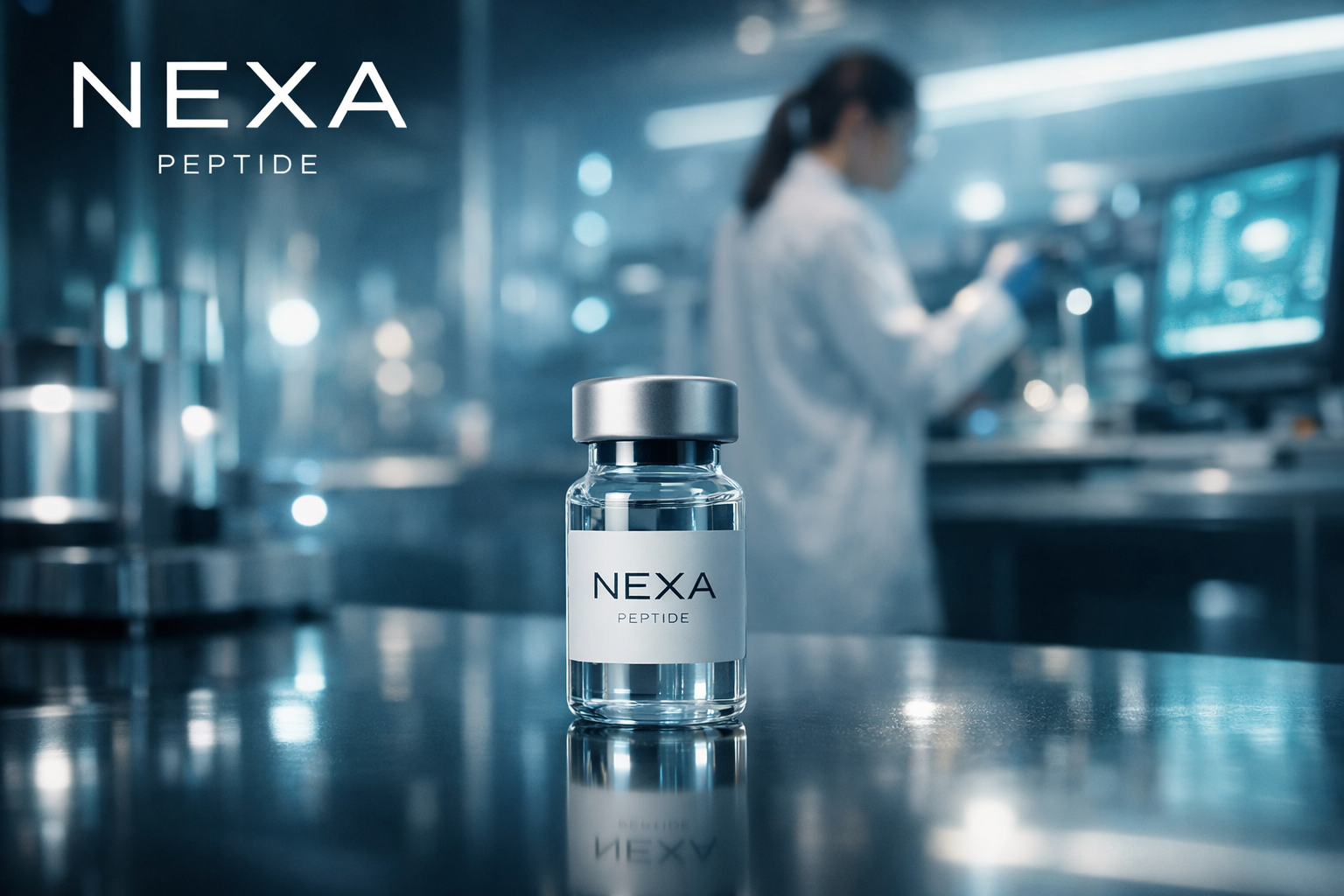
The Journey from Sequence Design to Pure Synthesis
Peptide synthesis involves assembling amino acids in a precise linear order. Modern automated synthesizers utilize protecting groups to prevent unwanted side reactions, allowing for exact step-by-step additions. However, as chain lengths increase, the likelihood of incomplete coupling or side reactions also grows.
Overcoming these chemical hurdles requires optimized reaction parameters and superior raw materials. Sourcing from dedicated specialists like Nexa Peptides guarantees that modern synthesis protocols are paired with rigorous post-synthesis purification steps, yielding pure, well-defined peptide compounds.
Purification and Verification Standards
Synthesizing the sequence is only half the battle; isolating the desired peptide from crude reaction mixtures requires specialized purification expertise. Preparative HPLC separates the target sequence from truncated or modified side products. Following separation, mass spectrometry confirms that the molecular weight aligns perfectly with the theoretical sequence.
- Purity Verification: High-resolution HPLC analysis to confirm sequence integrity.
- Identity Confirmation: Mass spectrometry verification to eliminate structural anomalies.
- Lyophilization: Cold drying processes that ensure long-term compound stability during transport.
Supporting Innovation Across Scientific Disciplines
Whether investigating cellular pathways, receptor interaction, or novel therapeutic targets, researchers need materials that perform predictably under experimental conditions. Standardized manufacturing practices ensure that every vial delivered to a laboratory meets exact biochemical specifications.
Conclusion
Advanced manufacturing and thorough analytical testing are indispensable to modern biochemical discovery. Relying on verified synthesis protocols ensures that laboratories receive reliable, high-grade reagents capable of supporting cutting-edge scientific inquiry.