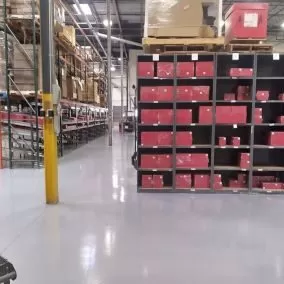
Installing quality warehouse epoxy flooring is a significant investment. Protecting that investment over its intended service life requires a maintenance approach that's practical enough for busy warehouse operations to sustain while being effective enough to prevent premature surface degradation. The good news is that epoxy flooring is genuinely low maintenance. But low maintenance is not zero maintenance, and understanding the right practices makes a real difference.
Why Does Maintenance Matter for Epoxy Flooring Performance?
Even the best industrial epoxy system experiences surface wear over time. The topcoat, which is the functional surface layer that provides gloss, traction, and chemical resistance, gradually thins under continuous abrasion from forklift tires, foot traffic, and cleaning activities. Proactive maintenance slows that thinning process and extends the interval before a maintenance recoat is needed.
Beyond wear management, maintenance prevents the accumulation of surface damage that accelerates coating degradation. Abrasive debris on the floor acts like sandpaper under forklift tires, accelerating topcoat wear. Incompatible cleaning chemicals attack the epoxy chemistry at a molecular level, breaking down gloss and eventually compromising the chemical resistance barrier. Understanding these mechanisms makes the reasoning behind specific maintenance practices clear rather than arbitrary.
What Cleaning Equipment Works Best on Warehouse Epoxy Floors?
For large warehouse areas, automatic floor scrubbers are the most effective cleaning approach. They combine mechanical scrubbing with controlled water application and recovery in a single pass, delivering consistent results across large floor areas efficiently. Scrubber pad selection matters significantly. Aggressive red or brown pads accelerate surface abrasion. Black or blue pads designed for no-scratch scrubbing are appropriate for epoxy surfaces.
For spot cleaning and smaller areas, soft-bristle push brooms for dry debris and mop systems for wet cleaning work effectively. The key is avoiding stiff steel-bristle brushes or abrasive scrub pads that scratch the topcoat surface. In daily operations, the single most protective cleaning practice is removing abrasive debris, sand, metal shavings, or grit, before it accumulates under equipment wheels.
Which Cleaning Chemicals Are Safe for Epoxy Flooring?
This is one of the most important maintenance considerations and one of the most frequently overlooked. Industrial cleaning chemicals vary enormously in their pH and chemical composition, and not all of them are compatible with epoxy topcoats. Highly alkaline degreasers, which are common in warehouse settings for breaking down oil contamination, can attack and dull epoxy surfaces with repeated use. Strong acid cleaners for mineral deposit removal are similarly damaging.
Neutral-pH cleaners designed for coated concrete surfaces are the appropriate choice for routine epoxy maintenance. They clean effectively without attacking the topcoat chemistry. When oil spills or other contamination requires something stronger, the appropriate approach is to use the stronger product as a targeted spot treatment with dilution, followed by thorough rinsing, rather than applying it across the entire floor.
How Should Chemical Spills Be Handled on Epoxy Floors?
Epoxy's non-porous surface means chemical spills don't penetrate instantly the way they do on bare concrete. However, prolonged surface contact with aggressive chemicals can still attack the topcoat, especially at elevated temperatures. The right practice is to clean up chemical spills promptly rather than leaving them to sit until the next scheduled cleaning cycle.
For most common warehouse chemicals including hydraulic fluid, cleaning solutions, and battery electrolyte, wiping up with absorbent material followed by mopping with a compatible cleaner and water rinse is sufficient. For concentrated acid or solvent spills, prompt dilution with water followed by complete removal prevents the prolonged surface contact that causes topcoat damage.
What Are the Warning Signs That a Maintenance Recoat Is Needed?
Regular visual inspection of the floor surface reveals early indicators that proactive recoating should be considered. The most obvious sign is differential gloss. High-traffic forklift paths show dull tracks compared to the glossy appearance of lower-traffic areas. This gloss reduction indicates topcoat thinning from wear. When those dull tracks become widespread across the main traffic areas, the timing for a maintenance recoat has arrived.
Secondary indicators include reduced anti-slip performance in textured zones, surface color changes from chemical exposure, and any areas where the topcoat has thinned to the point of revealing the color coat below. Addressing these indicators with a maintenance recoat before they become structural failures in the base system is always more cost-effective than waiting for the full system to require replacement.
How Does a Maintenance Recoat Work?
A maintenance recoat for warehouse epoxy flooring involves light mechanical preparation of the existing surface to remove any contamination and create a bond profile for the new topcoat, followed by application of a fresh topcoat layer. The existing base system remains intact. Only the worn topcoat layer is being renewed.
Properly executed, this maintenance recoat restores the floor's original gloss, traction performance, and chemical resistance barrier at a cost of roughly 20 to 30 percent of a full system replacement. For a warehouse epoxy flooring investment that's otherwise in good condition, a timely maintenance recoat can add another five to ten years to the system's total service life.
What Seasonal Maintenance Considerations Apply in NJ Warehouses?
New Jersey's seasonal weather creates specific maintenance considerations for warehouse floors. Winter months bring road salt and de-icing chemical tracking from delivery vehicles through loading dock doors. These chloride-bearing contaminants are particularly aggressive toward concrete and should be cleaned from the floor daily rather than allowed to accumulate.
Spring brings humidity increases that can create condensation on cold concrete adjacent to dock doors, especially in facilities with refrigerated zones. This condensation makes surfaces wet and potentially reduces traction temporarily. Ensuring the floor's anti-slip texture profile is maintained through regular inspection and timely recoating is the most reliable protection against this seasonal traction risk.
Conclusion
Maintaining warehouse epoxy flooring is straightforward when the right practices are understood and consistently followed. Daily debris removal, compatible cleaning chemicals, prompt spill response, and timely maintenance recoating together ensure the investment performs at its intended level throughout its service life. These simple disciplines protect a significant capital investment and keep the floor contributing positively to operational performance rather than becoming a source of maintenance burden.